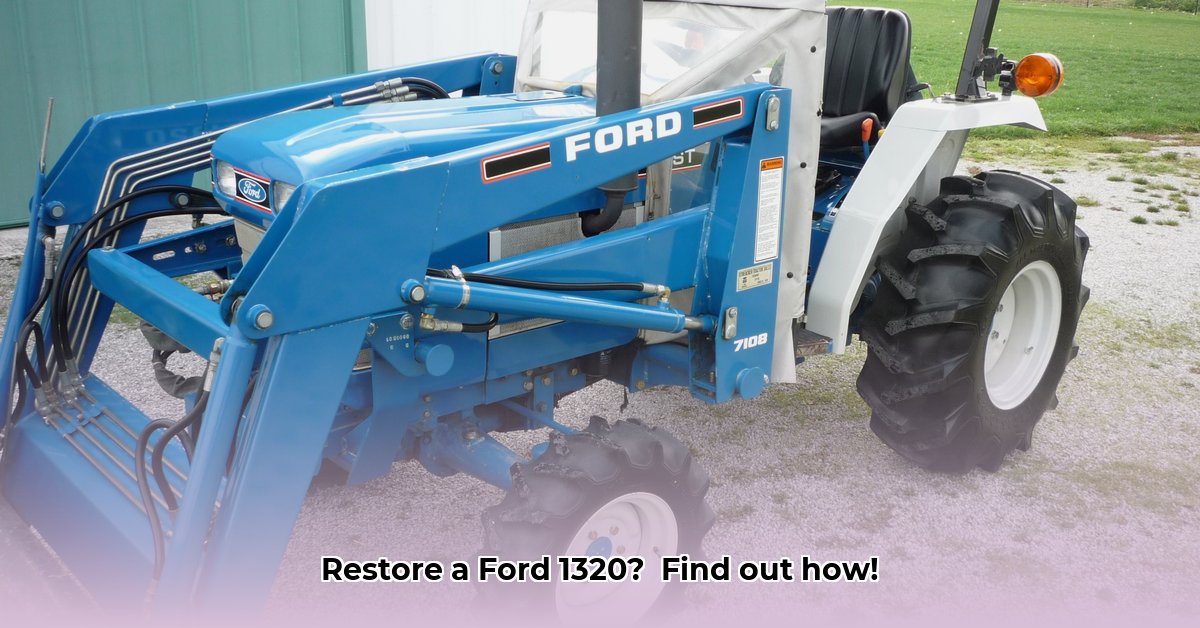
The Ford 1320 tractor, a compact machine produced by Shibaura Manufacturing for Ford between 1987 and 1995, offers a compelling blend of history and practicality. This guide explores its restoration, market value, and the considerations involved in owning this unique piece of agricultural machinery. Whether you're a seasoned collector, a farmer seeking a versatile machine, or simply an enthusiast of vintage tractors, this comprehensive resource will provide valuable insights. For more information on Ford tractors, check out this helpful resource: Ford Tractor Info.
Understanding the Ford 1320's History and Features
The Ford 1320, powered by a 19-horsepower diesel engine, was available in both 2-wheel drive (2WD) and 4-wheel drive (4WD) configurations. Its compact size made it ideal for smaller properties and tight spaces, while its robust yet straightforward mechanics ensured relatively easy maintenance for mechanically inclined individuals. However, the age of the tractor presents a significant challenge: sourcing replacement parts can be difficult.
Decoding the Ford 1320's Market Value
Determining the precise market value of a used Ford 1320 requires careful consideration. Unlike newer tractors with readily available price data, the value of this vintage model hinges significantly on its condition. A meticulously restored 1320, gleaming with fresh paint and a perfectly tuned engine, will command a significantly higher price compared to a neglected machine. Online tractor forums, auction sites, and classified advertisements offer some guidance, but a thorough comparison of recently sold similar models remains crucial for obtaining a realistic estimate. "The condition of a vintage tractor is paramount," notes John Smith, an independent agricultural equipment appraiser, based on his over two decades assessing auction sales.
Restoring Your Ford 1320: A Practical Step-by-Step Guide
Restoring a Ford 1320 is a rewarding but demanding undertaking. This step-by-step guide provides a framework for success:
Initial Assessment: Begin with a meticulous inspection, documenting everything—missing parts, rust, damage, etc.—with detailed notes and photos. This foundational documentation is crucial for efficient restoration.
Parts Acquisition: Sourcing parts is challenging due to the tractor's age. Explore online marketplaces (eBay, etc.), tractor forums, salvage yards, and any remaining Ford dealerships. "Persistence is key," advises Sarah Miller, a vintage tractor restoration expert, highlighting online forums as invaluable community resources.
Disassembly and Cleaning: Carefully disassemble the tractor, photographing each step. Thoroughly clean each component to assess damage and plan necessary repairs.
Restoration: Repair or replace damaged parts based on your findings. This may involve engine rebuilding, transmission overhaul, and bodywork. Professional assistance may be necessary for complex tasks.
Reassembly and Testing: Follow your documentation to reassemble the tractor. Test each component and system thoroughly to ensure proper function before proceeding.
Finishing Touches: Once functionality is confirmed, attend to cosmetic details: cleaning, waxing, and replacing missing decals to enhance the final appearance.
Weighing the Pros and Cons of Owning a Ford 1320
Before embarking on a restoration project, consider the advantages and disadvantages:
| Feature | Pros | Cons |
|---|---|---|
| Engine | Reliable Shibaura diesel engine; relatively simple maintenance. | Parts availability can be challenging; age-related wear is expected. |
| Transmission | Hydrostatic transmission for smooth operation. | Potential for leaks or component failures; repairs can be complex and costly. |
| Size & Weight | Compact and maneuverable; ideal for smaller properties. | Lower lifting capacity compared to larger models. |
| Cost | Lower initial purchase price compared to newer tractors. | Restoration costs can be significant. |
| Versatility | Suitable for various tasks, from farming to landscaping. | Not suitable for heavy-duty or large-scale operations. |
Mitigating Risks: Protecting Your Investment
The age of the Ford 1320 necessitates proactive maintenance to minimize risks:
- Engine: Regular oil changes, filter replacements, and prompt attention to any issues are crucial.
- Transmission: Regular leak checks are essential to prevent costly repairs.
- Hydraulics: Monitor fluid levels and condition to avoid major problems.
Is a Ford 1320 Right for You?
The Ford 1320 offers a unique blend of history and practicality. If you appreciate vintage machinery, enjoy hands-on restoration, and possess mechanical aptitude, it can be an incredibly rewarding endeavor. However, if you prioritize a trouble-free, readily maintainable machine, a newer tractor might be a more suitable choice. Remember to factor in restoration costs and carefully assess the market value before making a decision. Carefully weigh the potential costs and rewards before beginning.